How My Mother, Sis. Hana Holman,
Learnt the Truth
By Sis. Susan Waite
Canterbury Ecclesia
Melbourne, Victoria, Australia

How My Mother, Sis. Hana Holman,
Learnt the Truth
By Sis. Susan Waite
Canterbury Ecclesia
Melbourne, Victoria, Australia
Life was very sweet in Czechoslovakia, back then in the 1930's. It was a carefree and happy existence for Hana, her sister Ruth, and their parents Marta and Ernst Ofner. In the Summer, they walked into the surrounding forests. The girls loved to search for berries and mushrooms under the trees in the Bohemian woods. Marta believed that walking was good exercise for young girls and much of the summer was spent in this healthy outdoor exercise. They loved to play in the Hajecek Park, where they were amused by the antics of small caged animals. Two rivers flowed through the market town, the Vltava (the Moldau) and the Malse canal, which ran alongside the grandparent's hat shop. The girls swam in the little canal on the hot days. The town was Ceske Budejovice in Czech, or Budweis, famous for its Black Tower and town square with the Samson Fountain. Hana also has happy memories of holidays in Yugoslavia and their father teaching them to swim in the sea. They traveled south by train and visited Split and Dubrovnik.
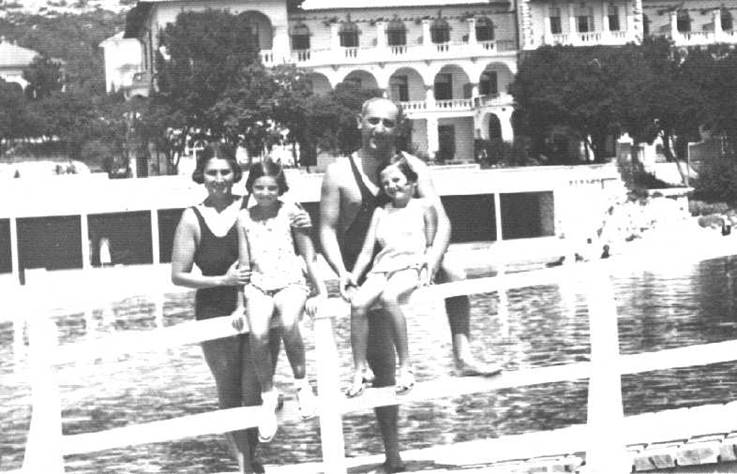
Yugoslavia
Another holiday was spent in the Sudetenland in northern Czechoslovakia, but this was at the time when Hitler marched into Czechoslovakia. Nevertheless the girls enjoyed the time staying on a farm and weren't aware of the turmoil going on in their country and in the minds of their parents.
Winter-time was always cold and snowy. Hana and Ruth loved to skate and ski with their parents. They used to carry tiny hot water bottles inside their fur muffs to keep their hands warm. Hana pushed a wooden chair in front of her on the ice until she learnt to balance freely on her brown leather skates. Her father Ernst Ofner had a skating accident in his younger days. His leg was injured, and from then on, he always walked with a limp. However, he was a handsome man with a very kind and gentle face, and a disposition to match. His parents and two sisters and brother, and their families, grew up in Budweis and they were a very close-knit family. His cousin was Rabbi Rudolf Ferda, the Rabbi of Budweis, who later became a Rabbi in the Terezin ghetto. Hana can remember him teaching religious instruction at her school. He traveled with the first trainload of Jewish people who were sent to the Terezin ghetto in 1942 and there he stayed conducting weddings, barmitzvahs and comforting the bereaved and the lonely, until he also was sent to Auschwitz towards the end of 1944.
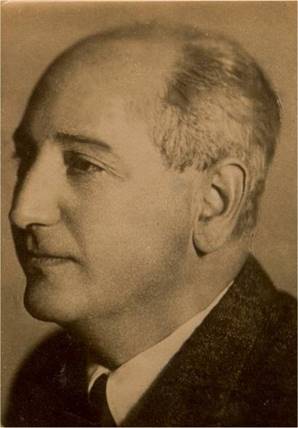
Ernst Ofner
Hana and Ruth rarely performed home duties. The live-in maid Marisia organized the cooking, the washing and ironing, and the girls lived a life of ease. However, when Ernst, as a Jew, lost his job in January 1939 he was no longer able to afford to employ her. She loved them, as much as they loved her, and many tears were shed at her parting. Hana has memories of Grandmother Bertha making apple-strudel with her Auntie Pulli. Together they pulled and stretched the pastry until it was paper thin, rolling it up, layer upon layer with apple-slices, cinnamon and sugar. Plum dumplings were another Czech specialty. A pot of soup was often simmering on the stove, usually chicken or lentils with root vegetables and onions.
In Budweis, Hana and her family lived in a flat above the Kafka grandparents. The Kafkas were Marta's parents. Grandfather Leopold Kafka was a coffee importer and had the imposing property built in the early 1900's. Down in the basement, the aroma of coffee filled the air. The coffee was deftly packaged into small bags for retail, along with pasta, spaghetti and other dry goods. Hana learnt to ride her bike down in the basement and the girls loved to visit their grandparents for special treats from Grandmother Helene's cupboard.
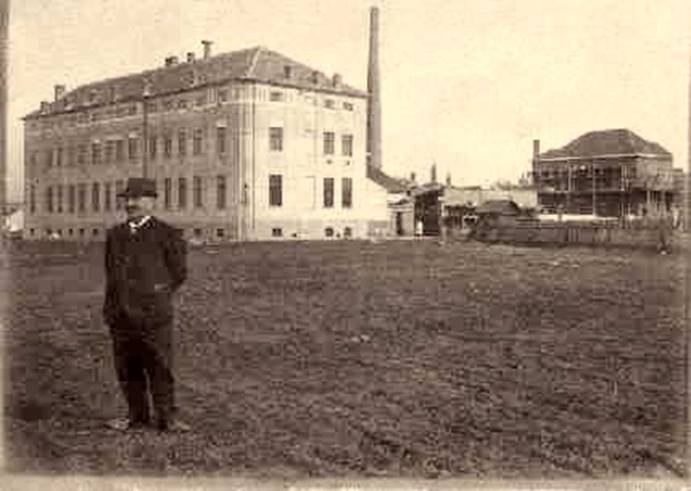
Leopold Kafka
The other grandfather, Jakob Ofner kept the strong Jewish traditions and it was in the Ofner grandparent's home that they all joined together for the Passover meal. His wife was Berta Ofnerova. Gentle by nature, she was much loved by her children and her grandchildren. She was very artistic, blocking and trimming hats in her small millinery shop near the town square. Those who remember her, say that she always had a loving expression on her face and speak highly of her generous nature. She loved to find a hat for her grand-children, angling it just right on their bobbed heads, insisting that it was a gift to be kept for always. She was also remembered for the baked apples that she simmered on the high tiled stove, a treat for any of her grand-children who called in on their way home from school. The aroma of baked apples always lingered in the air at Grandmother Berta's home.
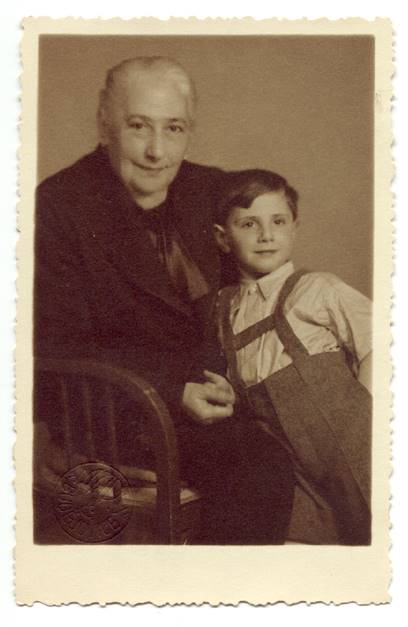
Berta Ofnerova with her grandson Josef Fauska…Berta died at Terezin and Josef at Auschwitz aged 10 years.
Life was full and happy with many family gatherings, Jewish celebrations, outings and visits to the synagogue. At Budweis, the synagogue was very close to where they lived. Every Sabbath, they put on their best clothes, Ernst picked up his prayer shawl and they walked across the narrow road to the old stone synagogue. Ernst walked to one side, to sit with his father, as men and women were not allowed to sit together. Marta and the two girls sat upstairs and listened quietly to the mellow singing of the Cantor.
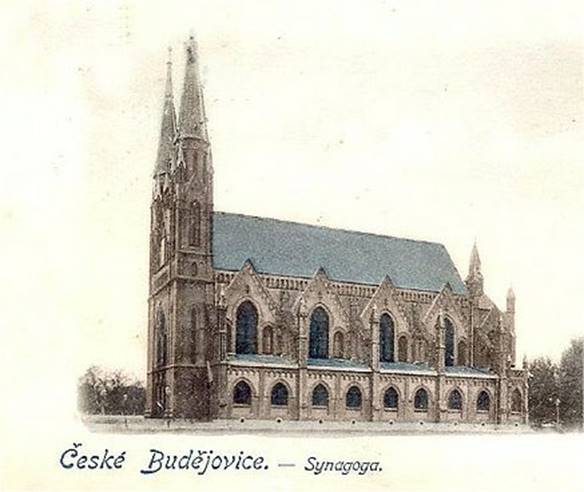
Synagogue destroyed on June 5th 1942
When Hana was ten years old, the family moved to Pilsen. Ernst was a financial adviser with the Pilsen council. Hana attended the Girls' Higher Elementary School in the southern district of Pilsen. However, school days, happy times with parents, visits to the grandparents in Budweis and quiet times in the beautiful Pilsen synagogue, were soon to come to an end.
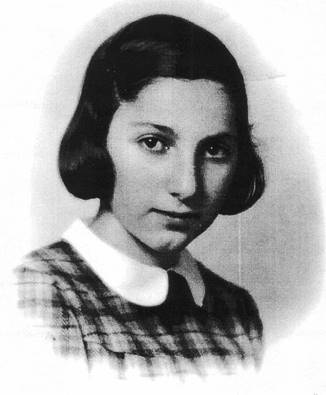
Hana, 14 years, passport photo
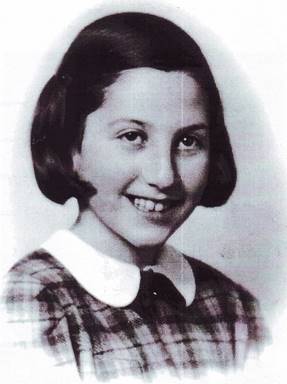
Ruth, 10 years, passport photo
At this time, the family lived opposite the Pilsen synagogue. Hana could look directly at the two synagogue towers from her bedroom window and could read the Ten Commandments written on the plaque between the towers. One morning, she woke to hear soldiers marching in the street below. Peering out, she observed two large tanks standing in front of the synagogue. Hana and Ruth were very scared and wondered what was happening. They were soon to experience a momentous turning point in their lives.
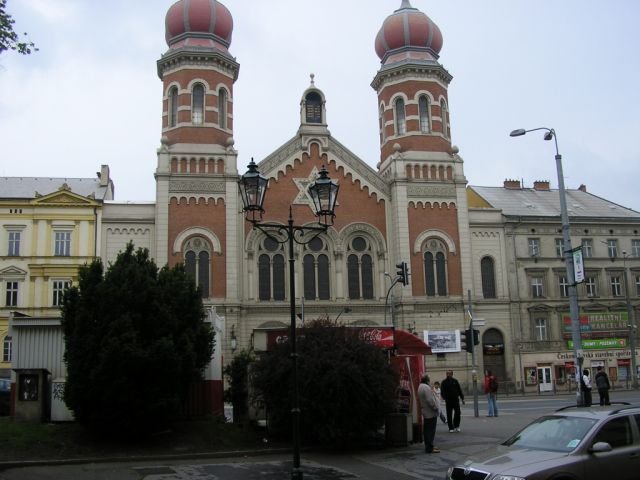
Pilsen synagogue
It was a pleasant summer day. Marta was sitting and darning stockings, on the balcony of their Pilsen home, which was above a shop at 8 Kramarovy Sady, while Ernst was in Prague. She observed a telegram boy peddling quickly down the street on his bicycle and knew it was a telegram from Ernst. Marta tore the envelope open, but in her heart she all ready knew the contents. There were two places for Hana and Ruth on the next Kindertransport to England, leaving on the 1st July 1939. One can only imagine how they all felt. They were a close-knit family, but it was the deep love of the parents for their daughters, that allowed them to make the decision to send them to a safe haven.
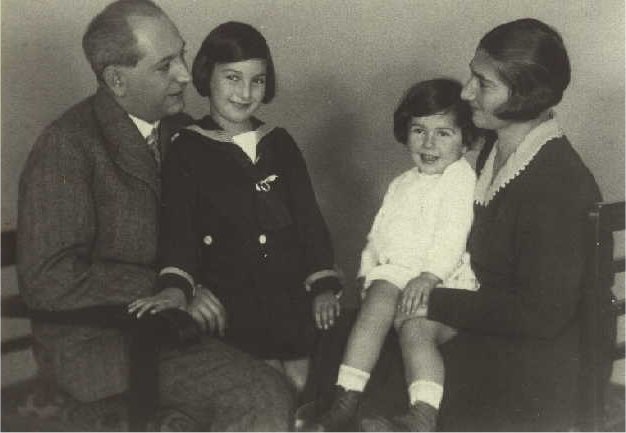
To the girls, it all seemed rather exciting at the time. Visits to the dressmaker were scheduled and new outfits were ordered. Hana and Ruth were used to fine clothes. Their mother often dressed them in matching plaids, with fresh white blouses. Their cases were packed with their new clothes and the well-used brown leather skates. Hana was given the family photo in a frame and her mother's brown fur muff. Little Ruth was given her father's grey silk prayer shawl. Marta gave Hana her small watch with a red leather strap. Family get-togethers were organized to say goodbye, and photos taken with their cousins.
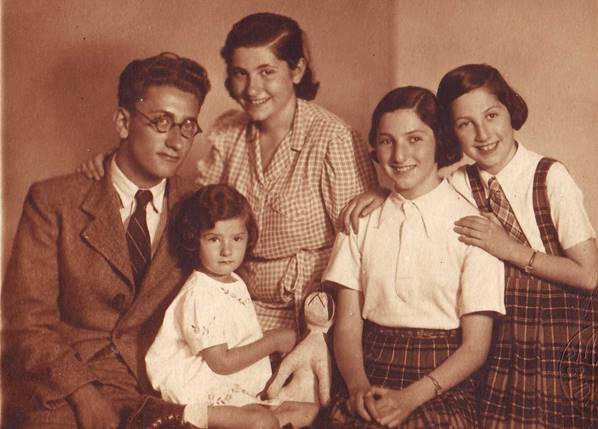
Hans and Eva Bonn, Hana and Ruth Ofnerova and little Eva Kafka.
Eva Bonn, Hana and Ruth were sent on the Czech Kindertransport to England.
Towards the end of June, the family traveled up to Prague and had a special three day holiday together. The parents instructed them about many things, but especially reassured them that they were loved very much and that they would try and follow them to England later.
Six hundred and sixty-nine Jewish children left Prague for England on the Czech Kindertransport organized by Nicholas Winton, Trevor Chadwick, Doreen Warriner and Bill Barazetti. Two hundred and forty-one Jewish children were on the same train as Hana and Ruth, (including them) that left Prague on July 1st 1939. It was the sixth Czech Kindertransport and one of the larger Kindertransports from Prague. (Sadly the train on September 1st, which had the largest number of Czech children on board, wasn't allowed to leave, as the borders closed, and those children ultimately died.) As Ernst Ofner, being Jewish, lost his job, he decided to travel to Prague to help with the organization of the Czech Kindertransport. He had attended the Charles University in Prague and had studied Law for four years, from 1916-1920, so maybe this was an asset in helping with the organization of the Kindertransport, but we don't know exactly what he did, but he regularly traveled by train to Prague to give assistance. I am very grateful that my grandfather Ernst Ofner played a small part, as did others, in assisting with the Czech Kindertransport.
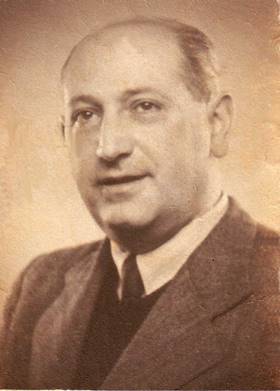
Ernst Ofner
On the evening of July 1st 1939, the Wilson station in Prague was crowded with parents, baggage, older children trying to be brave and little children clutching paper bags with sandwiches and apples for the long journey. Marta had made the girls a red toweling knapsack and pillow for the journey. Saying goodbye was heart-breaking and Hana remembers waving goodbye through the train windows, and seeing her parents standing and waving through the smoke and steam of the locomotive. That was the final visual memory of them for Hana and Ruth.
The children were frightened when German soldiers entered the train at the border and roughly tipped out their entire luggage, trod on their packets of rye bread sandwiches and grabbed their ten shilling notes. The next day, as they traveled through Holland and stopped at stations, the kind Dutch folk gave them warm chocolate to drink. A Dutch lady gave Ruth a large sausage, which she placed in her knapsack. Ruth recalled how bitterly they cried, as they tried to wash the sausage stained clothes in the wash-room at Harwich before boarding the train to London. The children crossed the English Channel in a ship called The Prague. Many were sea-sick, home-sick and bewildered.
Hana took care of her little sister Ruth as well as she could. They had always been so happy together, but when they reached London, they were devastated to find that they were to be separated and sent to two different foster-homes in Birmingham. Hana was billeted with Mr. and Mrs. Warre, a couple who belonged to the Christadelphian faith, and little Ruth went home with Mr. and Mrs. Brown.
The girls suffered terrible bouts of homesickness. They couldn't speak English. All Hana could say was Yes, No and I am hungry. The first evening she was shattered when she was handed the coal bucket to bring in the heavy black coal. At home, Marisia the maid performed these tasks. But gradually, life in England became easier. Maud and Herbert Warre were elderly, but very kind, and treated Hana like their own daughter. Hana looked after their haberdashery and millinery shop, brushing the hats each morning, as she watched the traffic go along Coventry Road in busy Birmingham. She walked around with a Czech/English dictionary in her pocket. The little money she earned, she shared with Ruth, leaving her two shilling pieces, whenever she visited her. Ruth attended the local primary school, but also worked very hard helping Mr. and Mrs. Brown.
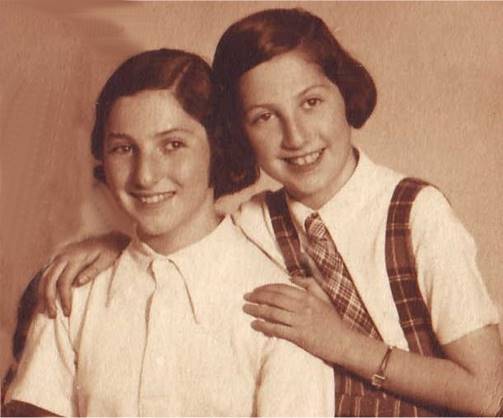
Hana 14 years and Ruth 10 years
Hana worked hard too, but she had the added blessing of belonging to a loving family, who taught her Bible principles. In the evening, they sat together to read the daily Bible readings. On Sunday mornings she loved to sing the hymns and little by little she learnt the English language. More importantly she was learning the message of the New Testament. She always began her prayers in Hebrew. Hear, O Israel: the LORD our God, the LORD is one ….. but gradually she was learning that the Lord Jesus Christ was the Messiah. She never left her Jewish faith, but just added to it….completed it.
Although Hana missed her parents, she received much love from the Christadelphian community. She attended the Meetings, had invitations out for meals and was surrounded with friendship and loving-kindness. It was war-time and life was difficult with food shortages. But far worse than this, at night there were air-raid warnings and bombs dropping. One night the house next door was razed to the ground, but the Warre family and Hana slept in the passage of their Birmingham home, and survived all the bombings.
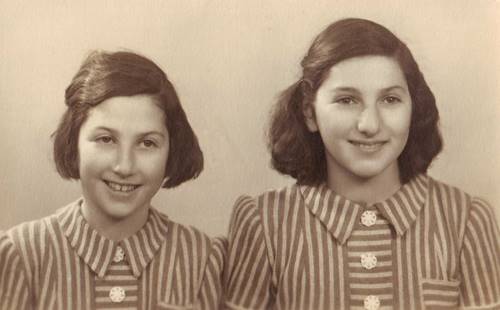
Ruth and Hana in England
When Hana was seventeen years old, she was baptized into the saving Name of the Lord Jesus Christ. Bro. and Sis. Whitehead instructed her in the first principles. Hana loved going to stay with them. They made a fuss of her and always put a hot water bottle in her bed. It was these little kindnesses and loving actions that helped her understand the gospel message of service to others. She was the first of the Jewish children, that were taken in by kind Christadelphian families, to be baptized. It was a joyful occasion as a Jewess and a Gentile were baptized on the same evening.
Hana and Ruth wrote to their parents often. Hana never told them how homesick they were, as she didn't want to worry them. The parents warned them that one day their letters might stop coming and once they were interred in the Terezin ghetto, the letters did cease. When the war was finally over, the girls knew in their hearts, that their parents were not alive. One day, Hana opened an official letter. It said simply, that Marta and Ernst had died at Auschwitz concentration camp in October 1944.
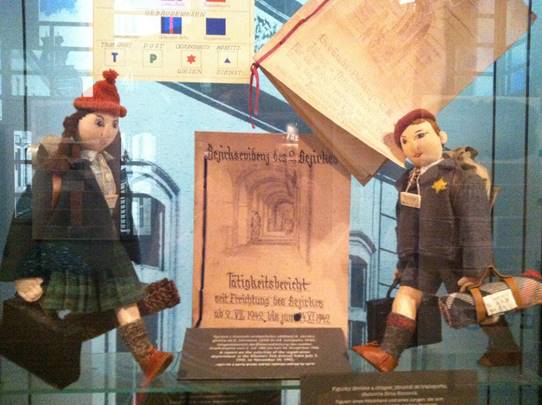
Marta, and her sister Erna, made dolls for the children in the ghetto from scraps of wool and fabric.
These were made by Erna Bonn and are now in the Terezin Museum.
The war was over, but there was no family in Czechoslovakia to return to, so Hana and Ruth remained in England. As the English people started to pick up the pieces, to rebuild and recover, so did Hana and Ruth. In November 1945, Hana Miriam Ofnerova married Kenneth Holman a kind, gentle man, the son of a Wiltshire game-keeper. He had been lodging with Bro. and Sis. Eric Maher, and after reading Elpis Israel by Dr. John Thomas, he asked if he could be baptized into the saving name of Jesus. He had never been to a Meeting so he was given instruction by Bro. John Graham, a dear old brother from Weston-Super-Mare Meeting, who was sight-impaired. Hana met Kenneth for the first time on the occasion of his baptism.
Everybody was relieved and happy that the war was over. The loss and the suffering had made them appreciate what was really important in life. People wanted to settle down, to make homes, to have families and to live in peace. Ruth also met a fine young man, Phillip Humphreys, and settled down to married life. Although Hana lost her parents, many close relatives, and her way of life in Czechoslovakia, her life was filled with even greater blessings. She learnt the message of the gospel, that Jesus was truly the Messiah and that our Heavenly Father has a wonderful plan of salvation for those that call upon His Name.
But as it is written, Eye hath not seen, nor ear heard, neither have entered into the heart of man, the things which God hath prepared for them that love Him. 1 Cor. V 9
The following is the letter written by Ernst Ofner (Hana and Ruth's father) in July 1939 to Mr. and Mrs. Warre, Birmingham, UK.
Translation of a letter dated 7th July 1939:
Esteemed Mr. and Mrs. Warre,
As the father of your present foster-child Hanna from Pilsen, I beg to express to you my deepest gratitude for your generosity and kindness with which you have received our child. I assure you that my child Hanna is all that I have and she represents all my happiness in life, and this, what is my life, is now with you. Whereas my other child, which means to me as much, is now with Mr. Brown, 54 Hannon Rd, Kings Heath.
You, as gentle people, will understand what it means to send beloved children into a strange world. How much pain and tears are in this. You will imagine under what pressure such a step could be resolved. I assure you that since, my eyes have not been dry and I had no sleep in the night, (but my child must never know this). My sense of duty only could compel me to save the children from a life which would be for them without honour and dignity. They shall grow up to become straight and believing and they should not loose their human dignity and a surrounding which would deprive them of it. They shall not live in fear and flight for being Jews, of the people described in the Bible.
And so I am crying daily tears for my beloved children. But I trust in the Lord that all our sacrifices shall not be in vain because I know that good and gentle people have taken care of my child, and they will educate and care for it in my stead.
Our Lord did not wish that humanity should be disgraced, he has provided angels which will not leave them and such angels are you Mr. and Mrs. Warre and Mr. and Mrs. Brown. I beg you with all my might not to leave our children Hanna and Ruth in whatever chance in life as long until we shall be again reunited.
It is our daily and hourly prayer to the Almighty Lord. We shall try either to have the children follow us or to follow them, wherever fate may drive us to. Not until then our life shall be again happy.
You cannot imagine how happy our family life has been and how all this has now been destroyed. Please protect our children before needs and disgrace, in peace and in war. Make them happy, satisfied and fit for life and leave them to remain Jews because we all love our suffering nation which we will not deceive against all persecutions. To be Jew is also to be humane and this is how we have also educated our children. You will convince yourself that they are made of good material. To make this good in them grow, will be your task, difficult but not ungrateful and you may be sure of the Lord's benediction for it.
And as long as we live, you may be sure of our deepest gratitude. By taking care of my children you have proved that you belong to a large and wise nation which will live for ever and always win.
We are the grateful parents of Hanna and Ruth. I request you to kindly send this letter on to the address of Mr. Brown too.
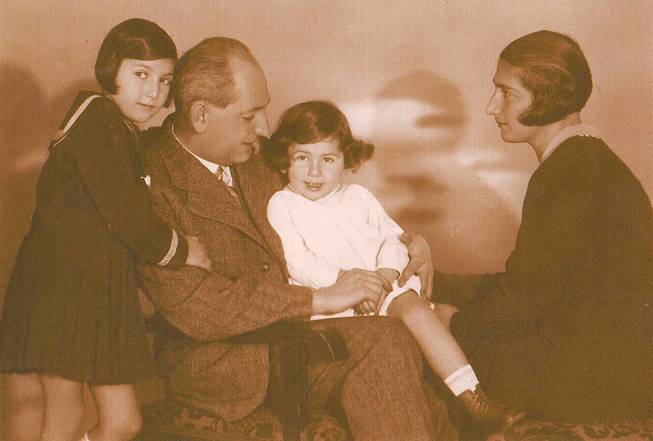
Updated by Susan Waite - March 2016 - aswaite@optusnet.com.au


BACK TO
"THE CHRISTADELPHIANS IN JEWISH HISTORY" PAGE

BACK TO "THE ECCLESIA" PAGE

BACK TO INDEX